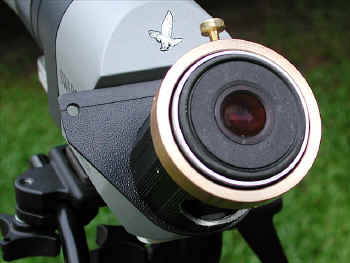
Tubular Mount
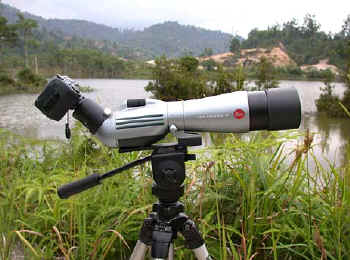
For the past few months, I have changed from using the handheld method to a tubular mount and a remote cable release to shoot my birds. This is in my strive for sharper pictures than that I have been achieving. It works to a point (more about this later). Now I am able to shoot birds at shutter speeds as low as 1/3 sec. provided the birds cooperate. Birds such as Flycatchers and Owls are now possible because they are often sedentary and usually hide in shaded areas.
The primary advantage of using a tubular mount is that the camera is always centered and parallel to the scope eyepiece. Another advantage is I can shoot from landscape format to portrait with just a 90 degree twist of the camera and mount. There is absolutely no problem mounting it on the camera filter thread as it is strong provided you give it due care. It is rumoured that the filter thread on the Nikon 995 is plastic. This is not true - it is alloy (aluminium) - I have a 995 and have put a knife to it to confirm this.
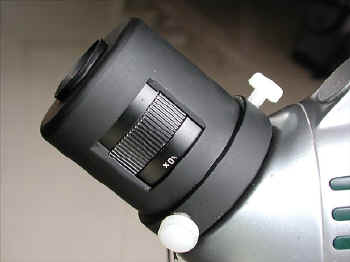
My mount is machined from solid brass with 28mm thread on end for the camera and open ended on the other to slide over the eyepiece. Attachment is by 3 x 6mm nylon screws. Most of the time, I use only one screw to lock. Apertures onopposite ends allow zooming of eyepiece.
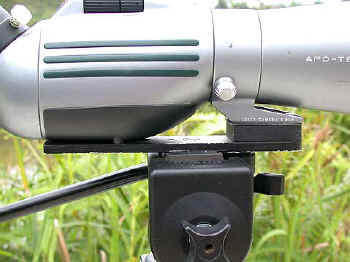 With the camera mounted, the weight is tipped too far to the back so a base plate made of 1/4” x 1” aluminium is fitted to move the scope forward to counterbalance. My preferred tripod head is the Manfrotto 128RC video head. The fluid- like resistance of the video head assists me in the composition of my photo. It also lowers the risk of scope damage due to accidental drooping and slamming of the scope against tripod legs.
Remote Release
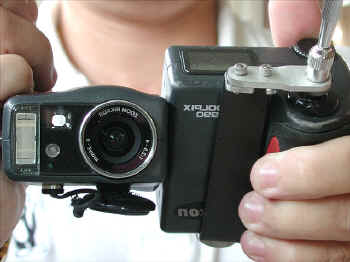
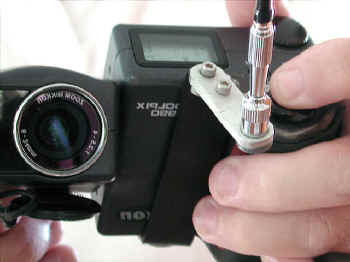
I bought a Nikon EC-MU1 electronic remote cable release for triggering the shutter but it was a pain to use. Switching it on requires remembering to press the shutter release after switching on the camera and then a 10 seconds wait for it to “wake up”. The USB attachment to the camera was a simple push in without any lock. Needless to say it was frustrating to use and I was almost glad when it failed after 11 months of use. My advice is to avoid it. Now I am using a 2 ft long mechanical release cable operating on a patent pending mechanism designed by Dr Chan. As illustrated below, it is an ingenious design in that the remote trigger device can be swung away to enable normal use as well.
Scope difference?
In spite of all the above to get sharper shots I still wasn’t getting the ‘bite’ of my friends’ pictures. That led me to investigate the possibility that the Swarovski is a better scope for digiscoping since all my friends are using the Swarovski. Standing side by side and shooting the same birds, my fellow digiscoper Ooi BY’s shots came out consistently sharper than mine. Here is a comparison photo.
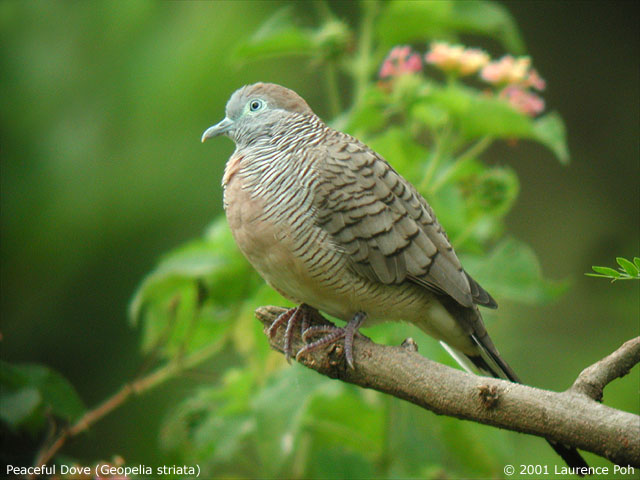 Above photo taken with Leica Apo-Televid 77 mm with 20-60X zoom eyepiece
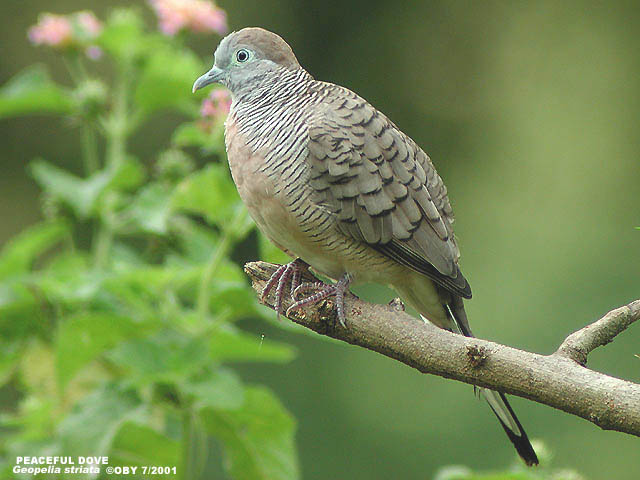 Above photo taken by Ooi with Swarovski AT80HD with 20-60X zoom
This is visible on the LCD even before post processing on the computer. So early this month (November 01) I bought a Swarovski AT80HD and although hard to pinpoint why, the Swarovski is indeed sharper lending details to bird feet and feathers that the Leica was not able to resolve. A point to note - the chromatic aberrations in the Swarovski is not as well controlled as in the Leica. Pictures taken with the Swarovski against the light, e.g. foliage flares with a purplish fringe. However, this is easily removed by photo software such as Adobe Photoshop. Here is where you can learn how to do that.
As I write this, I have already sold my Leica and I am now using the Swarovski with another form of tubular mount. It is now a 2 piece type with a shorter and lighter tube mounted on the camera. A longer tube with a slot for the shorter tube and cut-outs for zooming is permanently attached on the scope. This new patent-pending mount was designed by Cheang Kum Seng for some of us here in Malaysia. It works perfectly - faster to slot in than my brass tube due to the short attachment on the camera. Any fear of the long brass tube damaging the camera filter thread is now gone. Cheang has also designed a very accurate targeting sight made of plastic. A simple but effective solution.